15 Games That Changed Video Game Design
 by
in
A game can change an industry when other developers adopt its ideas. The influential title is not always the first to try them; sometimes it is the one that makes a new form easy to understand, build on, or sell.
Games build on earlier experiments, so industry history rarely has a single inventor. These entries trace how each title influenced the way other developers designed, distributed, or played games.
Each entry names an idea that travelled beyond the game and notes where its influence had limits. A game can matter historically without every later title needing to imitate it.
Arcade games reach a wider public
-
Pong (1972): electronic play made visible
Pong reduced play to a bouncing square, two paddles, and a clear goal, so passersby could understand a match at a glance. Cabinets also became social fixtures: people watched, challenged each other, and chased high scores. Pong was not the first video game, but its simple public format helped arcades reach a wide audience. The design could support only a few kinds of play, so later games took the accessible premise in new directions.
-
Space Invaders (1978): pressure that increases by itself
As the formation shrinks, its movement speeds up and the sound grows more urgent. Players can learn the attack patterns while chasing a high score, and the rising pace keeps short rounds tense. Space Invaders helped establish the shooter as an arcade format, and later games built on that rising pressure with new enemies, weapons, and movement.
-
Pac-Man (1980): a character crosses into popular culture
Pac-Man gave players a memorable character and enemies with distinct movement patterns. The maze turns movement into route planning. Its presentation also reached beyond the usual audience imagined by arcade marketing, and Pac-Man became recognizable outside the cabinet. That fame can overshadow the pattern design, which is what keeps the maze interesting to play.
-
Donkey Kong (1981): Platforming Gains a Story
Multiple stages, ladders, hazards, and jumps made the player navigate a small story rather than simply outlast a timer. The game introduced Jumpman, later known as Mario, and made spatial movement central to a goal. Platform games went on to develop many other forms, but Donkey Kong showed how an arcade challenge could be structured as a sequence of distinct physical problems.
Home games become authored worlds
-
Super Mario Bros. (1985): teaching through level design
The opening level demonstrates movement, danger, and reward through placement. A player can learn by acting, with visual cues explaining what the interface does not say. Side-scrolling also turns progress into a controlled sequence: the screen reveals just enough to invite movement. The game helped define a reliable home-console adventure and showed how a first level can function as both tutorial and miniature statement of the whole design. The formula can become predictable when later games rely on familiar obstacles without new movement ideas.
-
Zelda (1986): Exploration and Player Ownership
A connected overworld, hidden passages, tools, and save data gave players a reason to return to a console game over many sessions. The world did not always label the next step, so remembering a clue became part of play. This approach helped make nonlinear adventure a lasting console form. Its openness also meant that players could become lost; later games adjusted how much guidance they offered, revealing the tension between mystery and accessibility.
-
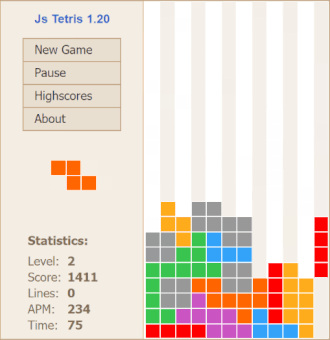
Tetris (1984): a universal action through a small rule set
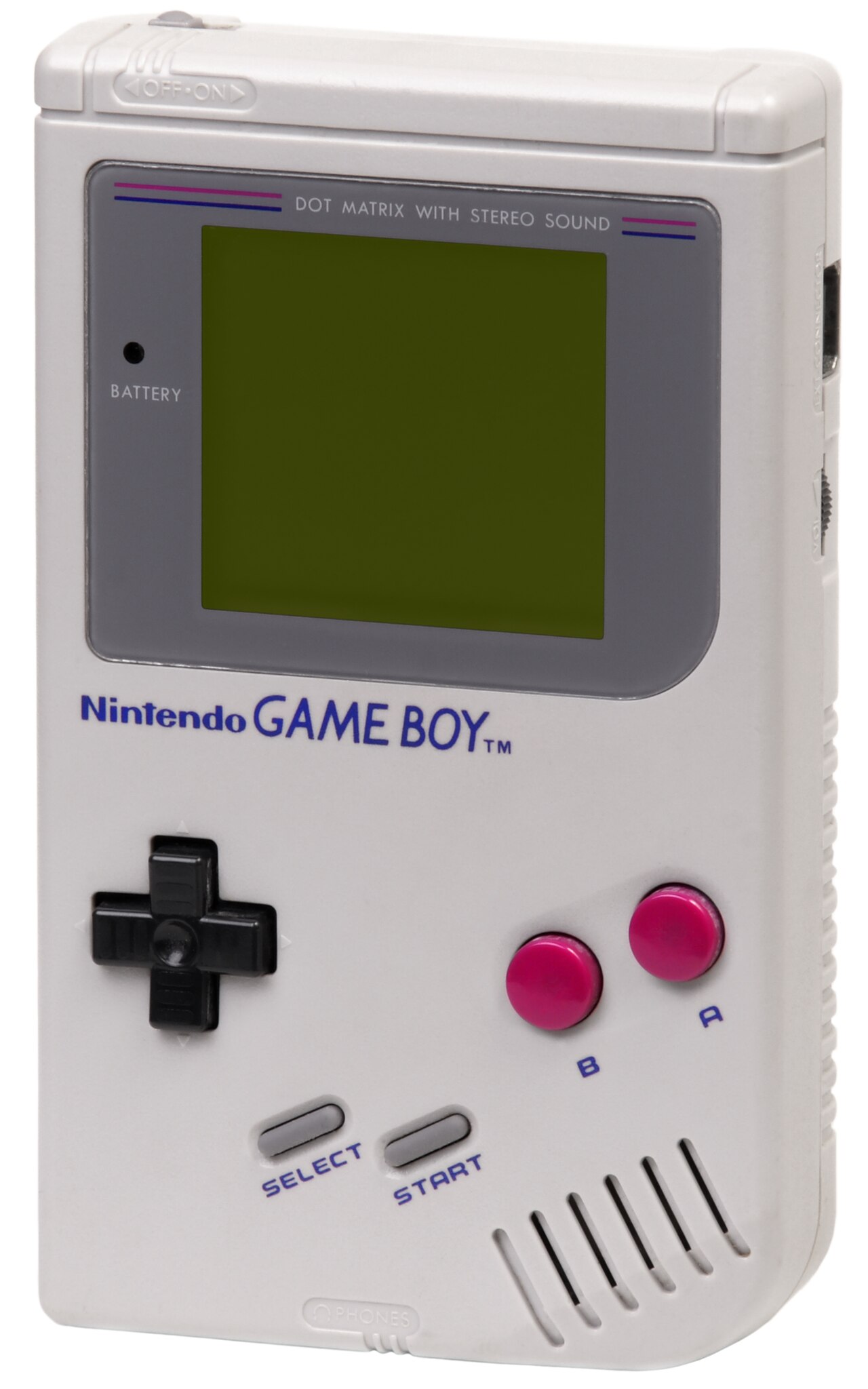
Tetris demonstrates that depth does not require a large world or narrative. Falling shapes, a changing board, and limited time create a pressure loop that is instantly understood across languages. Its portability made it especially adaptable to handheld play, and its rules have been reinterpreted for decades. A strong abstraction can travel widely, but imitation still needs precise pacing and feedback; merely borrowing falling blocks does not reproduce Tetris’s balance.
PC Games: Technology, Community, and Choice
-
Doom (1993): the shooter expands beyond the screen
Doom is remembered as much for how it circulated as for how it played: a shareware episode could be passed around, network matches gave PCs a multiplayer role, and editing tools let players build and share their own levels. Wolfenstein 3D preceded it as an important first-person shooter, so Doom’s turn was to make this PC-centered model more visible and participatory. Its industry legacy rests in distribution and user creation around a commercial game, not in a claim that one title invented the genre.
-
Warcraft III (2002): Custom Maps as a Platform
Its map editor let players make new rules and game modes as well as new battlefields. Community maps helped develop genres that later grew beyond the original strategy game. Those projects relied on the editor, access to the game, and players willing to keep making and sharing maps.
-
Ultima IV (1985): Ethics Shape Character Growth
Instead of treating morality as a late-game score or a simple good-versus-evil binary, Ultima IV tied virtue to repeated behavior. This invited players to consider how choices accumulated across an adventure. Later role-playing games took different approaches, but the important design question remained: does a game’s moral language affect what the player does, or only what the ending tells them? The rules and narrative must reinforce one another for the dilemma to feel real.
Three-dimensional play and cinematic structure
-
Super Mario 64 (1996): Learning Camera Control
Super Mario 64 put camera control in the player’s hands through the C buttons. Crossing a gap in 3D asks the player to judge depth and viewing angle at once; designers also have to keep platforms and landmarks readable as the view moves. Later 3D games would treat camera behavior as part of the control scheme, adapting it to open spaces, combat, and tight corridors.
-
Ocarina of Time (1998): Situation-Based Controls
Target-locking helped players orient themselves during combat, and actions that change with the situation reduced the need for a separate button for every situation. These solutions became common reference points in third-person adventure design. They did not end the camera problem; later games continue to balance player freedom with clear framing. The wider influence is a reminder that a control scheme can shape how a genre communicates.
-
GTA III (2001): The City as Interface
Earlier games had open spaces and non-linear play, but GTA III made a fully navigable 3D city feel like a coherent playground. Missions gave the city direction while driving, radio, pedestrians, and detours made it feel active between objectives. It helped establish the open-world action game as a major commercial form. The format can overextend itself: a large map adds value only when travel, activities, and mission structure have distinct purposes.
-
Half-Life (1998): Story in the Player’s View
Instead of frequently cutting away to cinematic scenes, Half-Life stages much of its narrative in the player’s moving view. That approach strengthened the feeling of continuous presence and influenced later first-person storytelling. It requires careful timing: if an event is missed or repeated too often, the scene can feel staged rather than discovered. The technique works when level layout, character behavior, and pacing all support it.
Networked play and player-made identity
-
World of Warcraft (2004): Life in a Persistent World
Massively multiplayer games existed earlier, but World of Warcraft brought a large, quest-driven online world to a wide audience. Clear roles, repeatable tasks, and social guilds helped players organize around shared progress. It showed that a game could be a place to return to, not only a campaign to finish. Persistent services also bring responsibilities: access, updates, moderation, and server continuity become part of the player experience.
-
Wii Sports (2006): the controller becomes a social signal
Motion gestures made the act of play visible to people in the room. A tennis swing was easier to imitate than a complex button sequence, giving non-specialist players a direct route into the game. Motion input did not replace traditional controls, but it expanded the range of people who could recognize an action by watching it. The limitation is physical variety: a gesture is not automatically a good control, and a game still needs responsive, forgiving design.
-
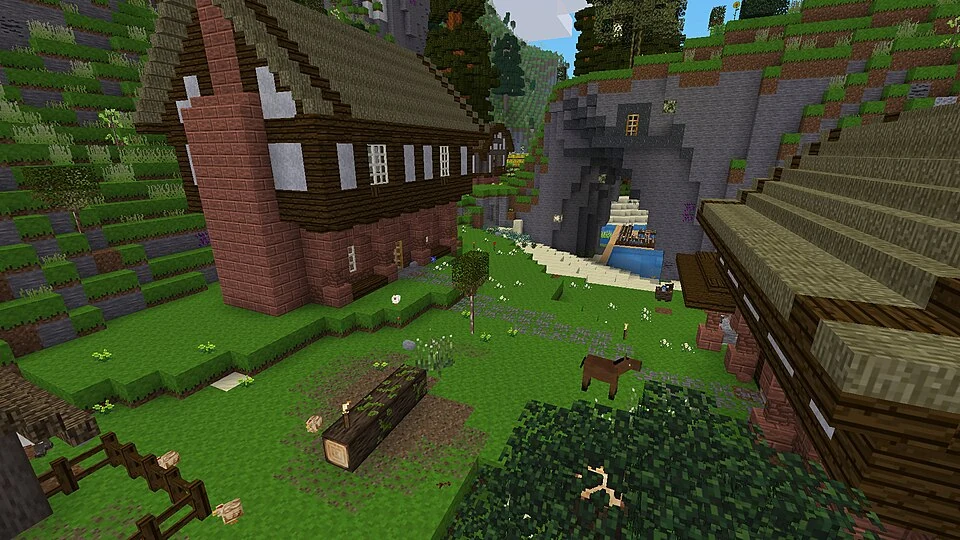
Minecraft (2011): a game world becomes a creative medium
Mining, crafting, and building gave players materials rather than a single prescribed result. The same world could support survival, architecture, role-play, education, or collaborative construction. That flexibility helped make player-created content a central part of gaming culture. Open systems also demand self-direction; some players prefer a clear campaign and may not want to supply their own objectives.
-
Fortnite (2017): a game becomes a changing social venue
Battle royale, building, creator modes, cross-platform play, and scheduled events expanded the idea of what one live game could contain. Its visible, frequently changing world helped link games with streaming and social media. The model is not universally suitable: ongoing services require sustained attention, and limited-time content can make a world feel temporary. Its lasting design contribution is the recognition that a game can combine a core ruleset with a social calendar.
Influence does not make a game perfect
A landmark title can be historically important and still have awkward controls, narrow representation, dated assumptions, or technical compromises. Influence explains what became possible, not what must be excused. Players can value a game’s design idea while criticizing the way it framed characters, violence, labor, or access.
It also helps to distinguish direct invention from popularization. Games rarely appear in a vacuum: designers inherit tools, genres, and ideas from earlier work. Pong followed experiments in electronic play; Doom built on earlier shooters; GTA III followed open-world predecessors. These titles stand out because they made a form unusually visible and durable.
The examples show several routes to influence: rules that are easy to learn, levels that teach through play, tools that let players make new modes, and online spaces that bring communities together. Later hardware changes the details, but designers still work on those problems.