Strategy and Simulation Games
 by
in
Strategy games ask how to allocate limited resources across decisions. Simulation games model a system and let the player observe or shape it. Many of the best titles do both.
Strategy and simulation games reward attention to systems. A player may be planning an army, balancing a city budget, flying an aircraft, managing a farm, or guiding an empire through centuries. The surface themes differ, but a common pleasure is seeing how a choice affects a larger pattern.
The terms are broad. A simulation might aim for realistic procedures or for an approachable model that captures the feeling of a system. A strategy game might involve short tactical turns or a campaign that lasts dozens of hours. Genre labels help narrow the field, while decision rhythm distinguishes real-time action, pause-and-plan turns, and systems that run while the player observes their effects.
Subgenres by decision rhythm
| Type | Decision scale | Examples | Best suited to |
|---|---|---|---|
| Turn-based strategy | One choice at a time; opponents respond afterward. | Civilization VI, Into the Breach | Players who like to compare options without a timer. |
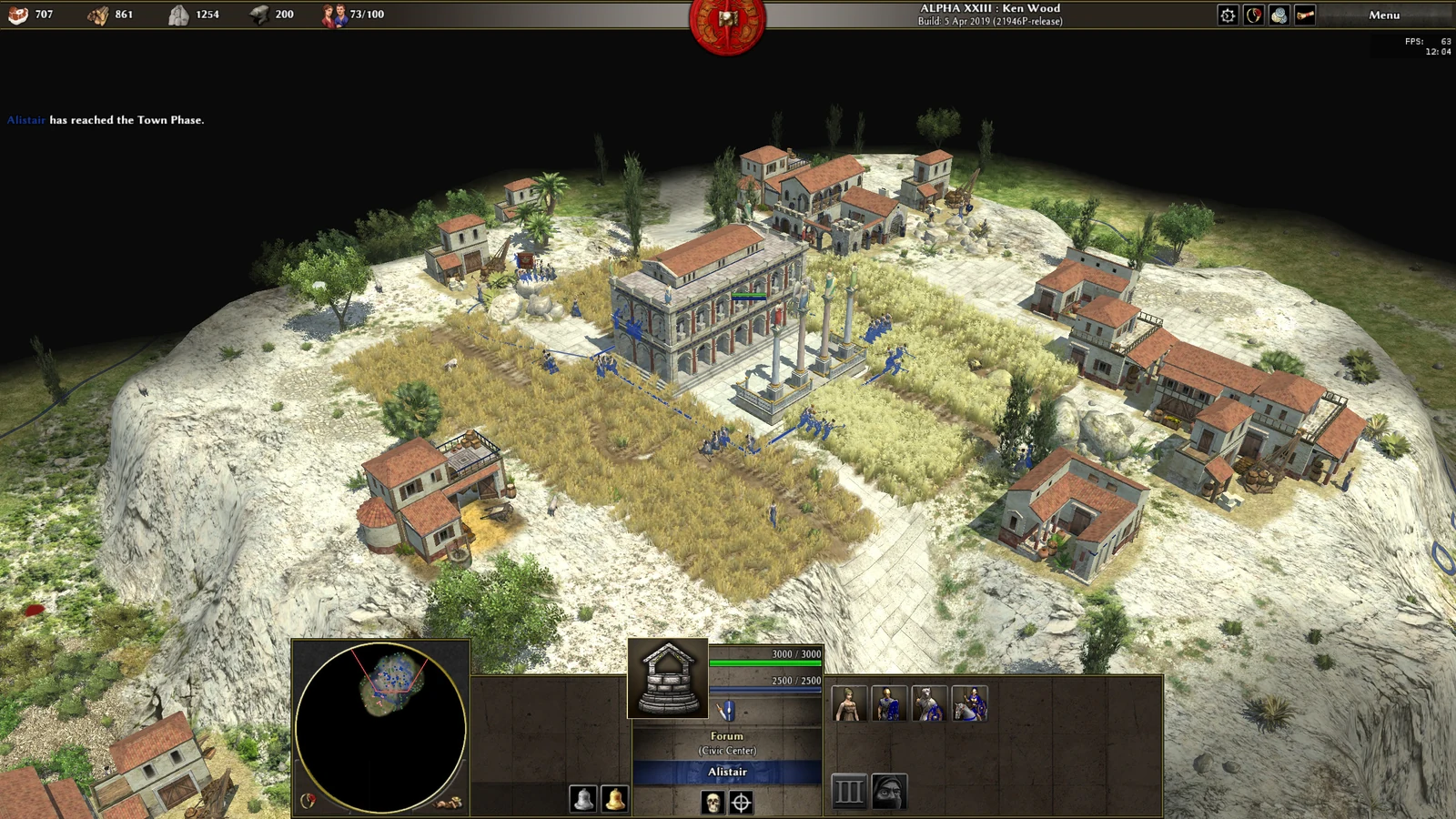
| Real-time strategy (RTS) | Economy and battles unfold together. | StarCraft II, Age of Empires II | Players who enjoy multitasking and quick adaptation. |
| 4X strategy | Explore, expand, exploit, and contend over a large map. | Civilization, Endless Legend | Long campaigns with several paths to victory. |
| Turn-based tactics | Small units, terrain, and immediate battlefield risk. | XCOM 2, Fire Emblem: Three Houses | Focused encounters with visible consequences. |
| Grand strategy | States, diplomacy, economies, and long-term history. | Crusader Kings III, Europa Universalis IV | Players comfortable learning layered systems. |
| City builder | Infrastructure, land use, services, and growth. | SimCity 2000, Cities: Skylines | Creative planners who enjoy balancing competing needs. |
| Life or management sim | People, routines, production, or schedules. | The Sims 4, Stardew Valley | Self-directed play and emergent stories. |
| Vehicle or professional sim | Controls and procedures for a modeled activity. | Microsoft Flight Simulator, Euro Truck Simulator 2 | Players who value process, atmosphere, and gradual mastery. |
Strategy: information, action, consequence
Turn-based play makes the decision space visible
Turn-based systems give a player time to inspect the board, compare units, and imagine outcomes. That does not make them automatically easy: many decisions can be irreversible, and a campaign can punish a weak early plan several hours later. Into the Breach communicates enemy intent before the player acts, turning each mission into a compact problem. Civilization has a broader scale: a city, technology choice, diplomatic move, and military decision may each matter over a long horizon.
The best turn-based games expose enough information for learning. If a unit can be defeated in one hit, the game should make danger legible. If a choice consumes a scarce resource, the cost should be clear. Randomness can add tension, but players need tools to account for it - cover, backup plans, healing, or the ability to retreat.
Real-time strategy tests attention as well as planning
In an RTS, an economic decision may compete with a battle unfolding elsewhere. The player must gather information, expand production, control units, and revise a plan under pressure. StarCraft’s factions differ in how they build and fight; Age of Empires pairs historical settings with resource gathering, technology, and unit counters. Good RTS design makes the important signals readable. If the player loses because the interface hides a threat, the lesson feels arbitrary.
Speed is only one dimension of skill. Map knowledge, scouting, timing, and economy can matter more than rapid mouse movement. Campaigns, scenario editors, difficulty options, and cooperative modes let new players learn systems before competitive pressure arrives.
Large-scale strategy trades detail for consequence
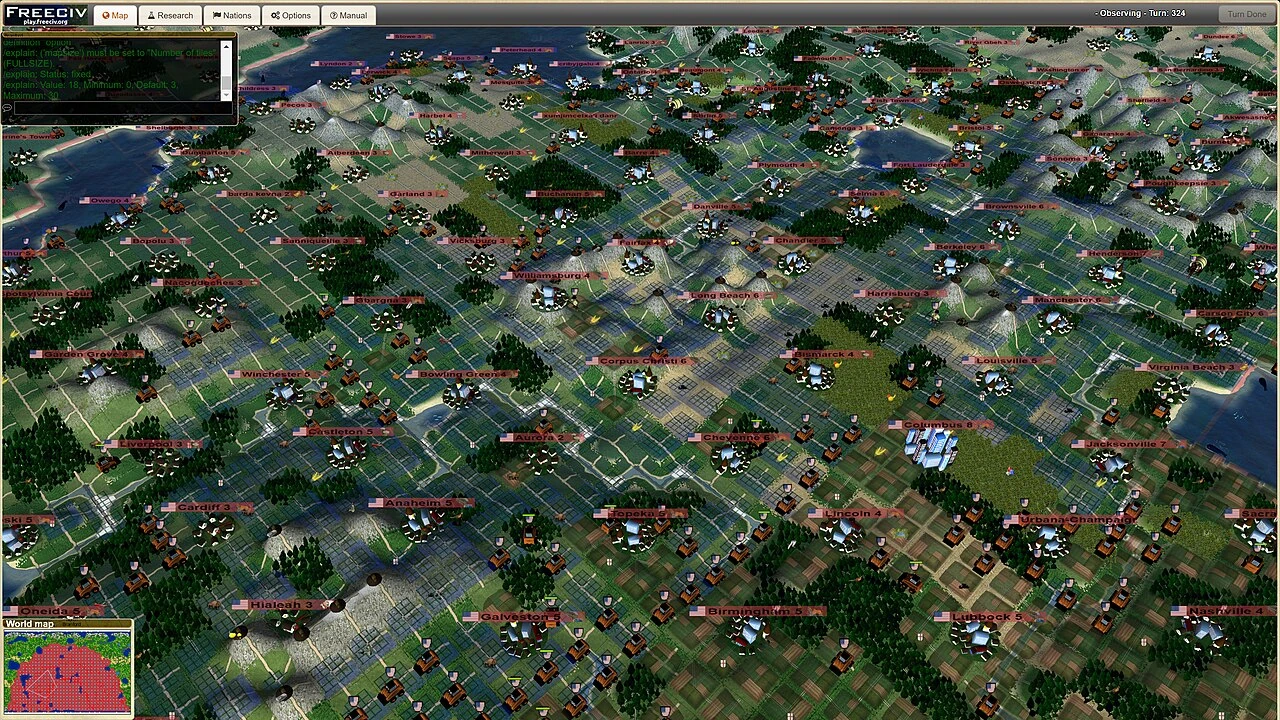
4X and grand strategy games model civilizations or states across a long period. They invite a player to compare many forms of power: technology, trade, territory, relationships, culture, or military strength. Since no turn contains the whole story, small choices accumulate. That is rewarding when the player enjoys creating a plan and adapting it; it can feel opaque when the game does not explain why a distant decision mattered.
Simulation: realism, abstraction, and playability
A simulation is a model, not a copy of reality. Designers choose which parts of a system to represent and which to simplify. Microsoft Flight Simulator models aviation procedures and landscape at an enormous scale, yet no consumer game can reproduce every detail of real flight. SimCity turns urban processes into readable controls so that zoning, transport, services, and tax decisions can form a playable city. Realism alone does not describe a simulation. The represented systems, their interactions, and the intended decisions define its model.
Simulation games may have no formal victory condition. A player might build a stable city, make a farm profitable, keep a household thriving, or simply observe what happens when a system changes. The freedom can be calming, but it can also leave a new player unsure what to do. Objectives, tutorials, scenario goals, and community-made challenges provide different levels of direction.
Model fidelity and fun are separate axes. A game may simplify complex rules to support good decisions, while a highly detailed simulator can be satisfying precisely because it demands procedures. Neither is a universal standard for quality.
Management sims often sit between the two categories. A theme park, football club, colony, or production line is a system with goals. The player must decide what to optimize and what to let remain imperfect. These games can generate stories from ordinary failures: a broken supply chain, an overextended expansion, or a single overlooked service that affects an entire population.
Complexity in Strategy and Simulation
- Session length: a skirmish can take minutes, while a 4X campaign may unfold across many evenings.
- Pause options: pausable real-time games bridge command speed and deliberate planning.
- Tutorial style: manuals, guided campaigns, tooltips, and interactive scenarios explain systems in different ways.
- Cost of failure: losing a battle may cost one unit, a campaign, or hours of accumulated progress.
- Mod support: User-made scenarios can increase variety, though they may require extra setup or community knowledge.
- Separate depth from interface density. A complex system can be understandable if its controls and feedback are clear.
For a quick tactical puzzle, Into the Breach is compact and exposes enemy intent. For a sprawling empire, Civilization gives turns a long-term consequence. For cooperative battlefield planning, games such as Company of Heroes 2 or Northgard make territory and unit positioning central. For relaxed building, a life sim or city builder offers goals the player can set personally. These are different moods rather than steps on one scale of quality.
Strategy games and fairness
Difficulty settings are not always a simple easy-to-hard ladder. Some change enemy aggression, others alter resource income, information, or starting positions. A setting that makes a game easier by giving the player more resources may not teach the same habits as one that slows the pace or provides clearer warnings. Challenge modes can be useful when they let players adjust the system that causes friction.
Random maps create variety, but they can also produce uneven starts. In competitive games, map balance and clear rules matter because both players need a fair chance to act on their skill. In single-player games, a surprising map may be part of the appeal. The same random element can be exciting in a single-player game and frustrating in competitive play.
Strategy games often contain historical themes. A game’s map, factions, and events are design models, not complete histories. Players can enjoy the strategic problem while recognizing that a game simplifies real societies, conflicts, and people. When historical accuracy matters, it is useful to distinguish the game’s playable abstraction from a factual account.
Entry Points in Strategy and Simulation
The preferred format depends on the type of decision. Turn-based tactics present a clear puzzle; RTS games ask players to manage several processes at once; 4X and grand strategy reward long-term planning; city and life sims center on building and system growth. Simulators tend to suit players with a genuine interest in their subject.
Fit also depends on available attention: save systems, pause options, optional goals, online group requirements, and campaign length determine how a game fits into short or long sessions. A reputation for depth matters only when its play structure suits the player.
Strategy and simulation games reward seeing a plan affect the system: a road changes traffic, a scout reveals a threat, or a shortage halts production. The game’s timescale and consequences determine whether that feels calm or demanding.