The Legend of Zelda: Games and Eras
 by
in
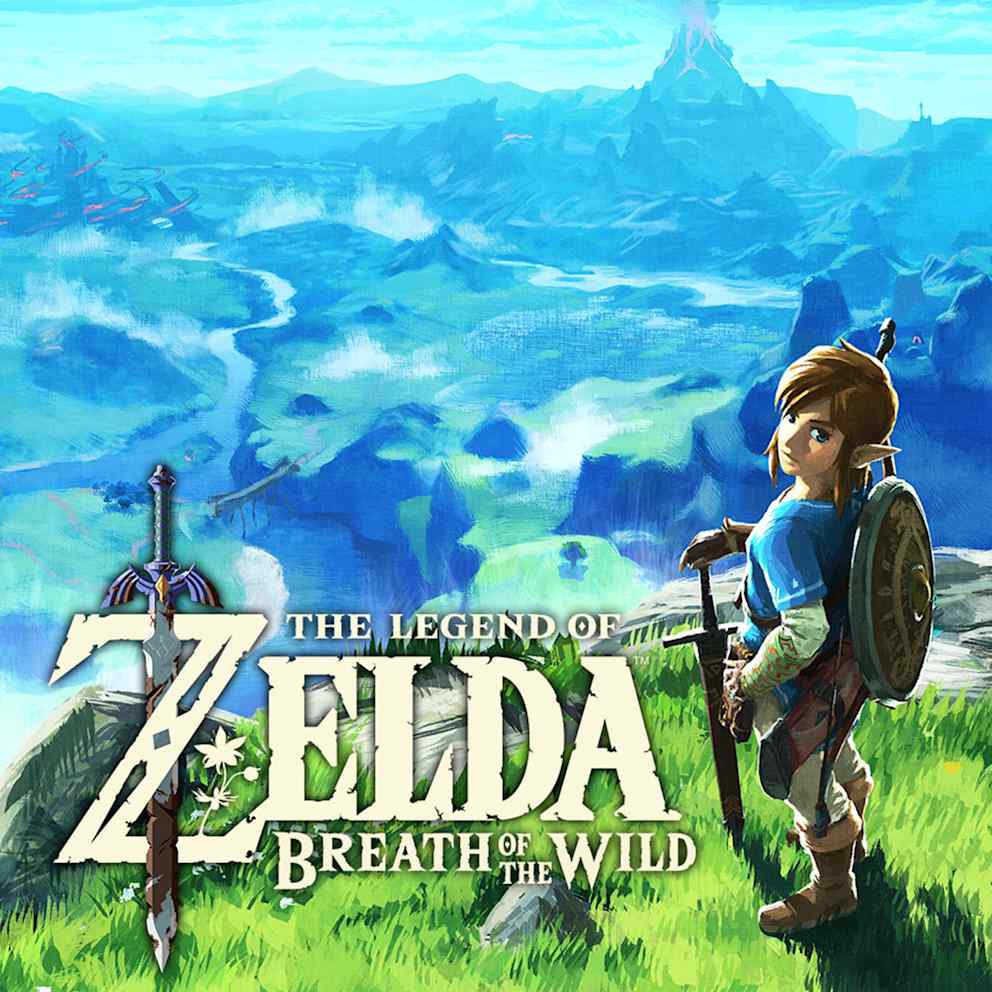
The Legend of Zelda changes its structure from game to game, while exploration remains a common thread. Landmarks, tools, and environmental clues make navigation and puzzle-solving central to the series.
The Legend of Zelda is an action-adventure series built around exploration, puzzles, combat, and a recurring fantasy mythology. Its first game arrived in Japan in 1986 as an open world with secrets and goals rather than a sequence of fully explained tasks. That sense of discovery has taken many forms since: compact 2D overworlds, large dungeons, 3D camera systems, seafaring, motion controls, and the open systems of Breath of the Wild and Tears of the Kingdom.
Despite its name, Zelda is not one continuous story that every player must finish in order. Link is the playable hero in most main entries, while Princess Zelda, the land of Hyrule, the Triforce, and cycles of conflict recur in different forms. Nintendo’s official chronology connects many titles, yet the games are designed to be experienced as individual adventures. The timeline can enrich the lore without functioning as a prerequisite.
A series of changing structures
- The original quest and its 2D descendants
- The Legend of Zelda and A Link to the Past emphasize a top-down world, dungeons, secrets, and items that change how Link moves or fights. The player often learns through exploration rather than explicit guidance.
- Portable experiments
- Link’s Awakening moves the adventure away from Hyrule, while handheld entries reshape the formula around shorter play sessions and distinctive tools.
- The 3D transition
- Ocarina of Time introduced a navigable 3D Hyrule, situation-based actions, and target-locking. Majora’s Mask used a repeating schedule and a different tone to make time itself a puzzle.
- Worlds built around a central traversal idea
- The Wind Waker uses ocean travel; Twilight Princess leans into a darker transformation and a large adventure; Skyward Sword places motion-oriented swordplay and a structured sky world at its center.
- Open-air Hyrule
- Breath of the Wild and Tears of the Kingdom prioritize exploration and systemic experimentation, letting physical rules support multiple solutions.
The core Zelda loop
A traditional Zelda adventure moves between exploration, puzzle-solving, combat, and a new ability. The player finds a tool, learns its rules, then uses it to interpret a dungeon or revisit an earlier part of the map. A hookshot might change traversal; a bomb can reveal a hidden passage; a musical instrument can affect time or the environment. Good item design makes an object useful across several types of obstacle, so acquiring it changes the player's mental map.
Dungeons often express this loop in a concentrated form. Rooms introduce a rule, combine it with an obstacle, then test whether the player understands the pattern. A boss may ask for a tool’s specific use, but strong encounters also leave room for observation and timing. The dungeon creates a clear arc: unfamiliarity becomes competence, then a new route opens.
Open-air entries rearrange that pattern. Breath of the Wild distributes puzzles across shrines, environmental challenges, enemy camps, and exploration itself. The player can often approach a problem through physics, weather, climbing, cooking, or combat. This freedom makes experimentation a central pleasure, yet some players may miss the long, themed dungeons and carefully ordered item progression of earlier games.
What changed in the open-air era?
| Design element | Earlier structure | Open-air structure |
|---|---|---|
| Progression | New items often gate new regions or dungeon sections. | Many abilities are available early; player knowledge opens routes. |
| World navigation | Maps and dungeons organize a sequence of discovery. | Landmarks invite self-directed travel across a continuous landscape. |
| Puzzle solving | Often built around one dungeon’s tool and room logic. | Physical systems allow improvised solutions using objects and environment. |
| Combat preparation | Equipment and heart containers shape survivability. | Food, weather, weapon durability, and enemy behavior make preparation vary by location and encounter. |
| Player guidance | NPCs and item clues help point toward the next goal. | Visual landmarks and player curiosity carry more of the direction. |
The newer structure does not make the older one obsolete. It answers a different design question. A linear dungeon can make a tool’s purpose feel precise; a systemic world can let a player invent an unexpected answer. Fans may reasonably prefer one rhythm over the other.
Entry points by structure: Ocarina of Time offers classic 3D progression, A Link to the Past is a compact 2D example, and Breath of the Wild makes landscape and physics central to play.
Hyrule, history, and recurring symbols
The series often reuses archetypes rather than repeating one biography. Link is an avatar of courage, Zelda can be a ruler, scholar, fighter, or strategist, and Ganon or Ganondorf embodies different versions of power and ambition. The Triforce turns wisdom, courage, and power into a visual and narrative shorthand. These motifs allow each game to tell a self-contained tale while contributing to a wider mythology.
The official timeline places many games into branches connected to events around Ocarina of Time. This structure can explain how different versions of Hyrule relate, but it is not a simple reading order and does not remove the series’ deliberate ambiguity. Chronological order suits readers following the mythology; gameplay can be approached by era and structure.
Hyrule’s geography also changes meaning. Familiar names and landscapes recur, but they are not always identical places in a strict historical sense. A field, mountain, or village can function as an echo, inviting recognition without requiring a map comparison. That flexibility lets the series keep a sense of home while introducing a new world to explore.
How Zelda balances mystery and clarity
Early games trusted players to explore secrets, sometimes with little direction. That approach can make a hidden cave feel like a personal triumph, but it can also leave a player wandering without a useful clue. Later entries added maps, journals, characters, and more visible landmarks. The challenge is to support orientation without reducing every mystery to a marker.
Controls are another part of clarity. Target-locking in Ocarina of Time helped frame combat in 3D. Situation-based actions reduced the number of buttons needed for climbing, conversations, and doors. Motion controls later offered a direct gesture but demanded a particular physical setup. Each solution helped some actions and created new limits. The interface is strongest when the player can predict what the game will do before pressing a button.
Accessibility and difficulty also vary. Zelda games generally let a player make progress through exploration and preparation, but bosses, navigation, or motion input can still be challenging. Remappable controls, readable text, hints, and options around motion play affect whether a specific release feels comfortable. The series name does not guarantee that every game has the same control demands.
Where to start by player preference
- For a 2D classic: A Link to the Past gives a focused world, dungeons, and item-driven exploration.
- For a handheld-sized adventure: Link’s Awakening has a self-contained setting and clear progression.
- For a landmark 3D quest: Ocarina of Time introduces the camera, lock-on, and dungeon structure that shaped later adventures.
- For an unusual, time-based story: Majora’s Mask turns a repeating schedule into both a mechanic and a mood.
- For open exploration: Breath of the Wild emphasizes climbing, weather, physics, and player-made routes.
- For a sequel that expands building: Tears of the Kingdom builds on open exploration with creative object combinations and layered spaces.
Not every edition is equally easy to access on every device, and remakes sometimes alter art, sound, or quality-of-life systems. Modern ports may suit a first playthrough, while historians and long-time fans may value the earlier version. Those are different goals and can lead to different choices.
How the games fit together
Nintendo’s official Zelda timeline links recurring names and symbols through several branches of Hyrule’s fictional history. Each game remains understandable on its own, without reading the timeline first.
Localization can influence clues and characterization. Wordplay, item names, and hints may not map directly between languages. A puzzle that appears strange in one version may have depended on a phrase or cultural reference in another. When comparing editions, focus on how the actual clue text guides play, since translation choices can change what the player notices.
Why the series remains recognizable
Zelda remains recognizable because each game makes the world part of the puzzle. In an older entry, a cracked wall can hide a passage; in Breath of the Wild, a distant landmark can set the next goal. The format has changed, but players still have to pay attention to the landscape.
The series also leaves room for disagreement. Some players prefer the deliberate cycle of item, dungeon, and boss. Others prefer the freedom to climb, cook, experiment, and set their own direction. That variety is not a flaw in the catalogue. It shows how one creative tradition can support different relationships between structure and discovery.
A Zelda game is at its best when a player’s curiosity becomes a real action: checking a ridge, trying a tool, revisiting a room, or looking at a familiar symbol from a new angle. The surface changes; the sense of finding a way through remains.