Grand Theft Auto: Games and Eras
 by
in
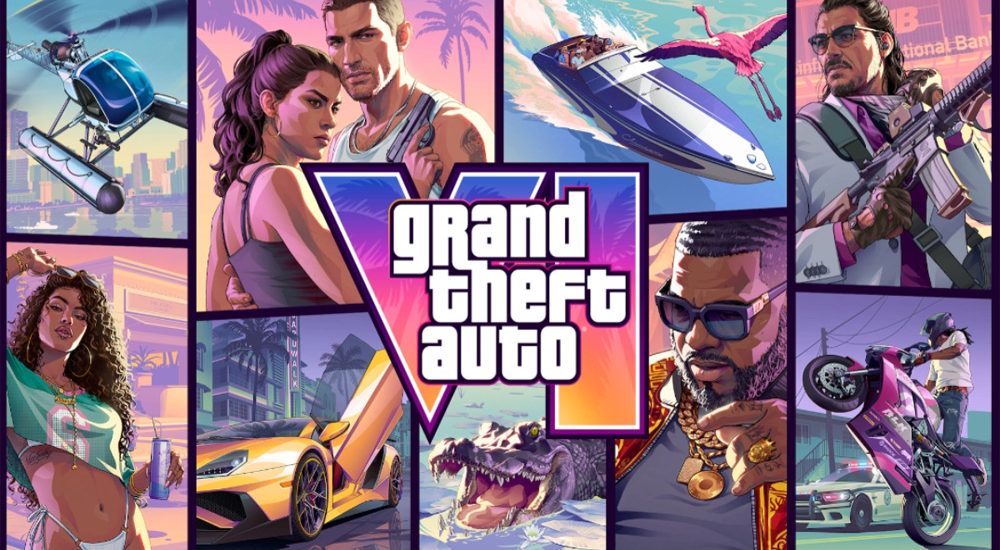
Grand Theft Auto pairs scripted crime stories with the freedom to roam, drive, and cause trouble between missions. Each game reshapes that mix around a different city and era.
Grand Theft Auto began as a top-down action game in 1997 and grew into one of gaming’s most recognizable open-world series. Its cities combine missions with driving, radio, side activities, and unscripted encounters. The player can follow a crime story or ignore the next objective for a while and see what the city allows. That combination is the franchise’s central design idea: a structured narrative inside a place that often encourages detours.
The series is also known for satire and controversy. Its fictional cities exaggerate American and international media, politics, consumer culture, and celebrity. The humor can be sharp, vulgar, and deliberately provocative; the games also contain crime and violence. A clear description of the series should treat both the craft of its worlds and the content of its stories seriously.
Grand Theft Auto in eras
| Era or entry | What changed | Why it matters |
|---|---|---|
| Grand Theft Auto (1997) | Top-down driving, missions, and open city routes. | Established the criminal sandbox and city-as-playground idea. |
| GTA III (2001) | A fully navigable 3D Liberty City. | Joined free roaming, missions, radio, and a living-feeling city in a new form. |
| Vice City (2002) | A bright, stylized 1980s-inspired setting with a strong music identity. | Showed how time, sound, and fashion can shape an open world. |
| San Andreas (2004) | A wider state, multiple cities, and extensive character systems. | Expanded the series’ sense of geography and personal progression. |
| GTA IV (2008) | Physics-heavy movement and a more focused immigrant crime story. | Shifted attention toward character, consequence, and urban realism. |
| GTA V (2013) | Three protagonists, a large region, and a major online component. | Connected mission design to a wider, persistent social space. |
Earlier releases also include London expansions and handheld interpretations, while later editions have appeared across multiple hardware generations. A remaster can alter controls, lighting, draw distance, or interface. When a particular detail matters, it is useful to specify the original game, platform, and release.
The open-world loop: mission, detour, consequence
A typical GTA session moves between three modes. A mission supplies a goal and a sequence of events. The city provides transport, characters, and incidental activity between those events. The player’s behavior can trigger a response from police, traffic, or pedestrians, creating an unscripted consequence. This loop gives the game momentum without requiring every minute to be directed by a cutscene.
Driving is part of the identity rather than a way to travel between “real” gameplay. Cars have different weight, acceleration, and handling; roads and neighborhoods create different risks. A chase becomes a spatial problem: stay on a main road, cut through an alley, swap vehicles, or lose the pursuit in a changing environment. Radio stations help give those routes a sound and cultural mood.
Missions still matter. They pace the story, introduce tools, and use the map in authored ways. When a mission allows several approaches, the open city feels connected to player choice. When it requires one precise behavior after encouraging improvisation, the transition can feel restrictive. This tension is one of the series’ most persistent design challenges.
Three cities, three kinds of satire
Liberty City: crowded modern life
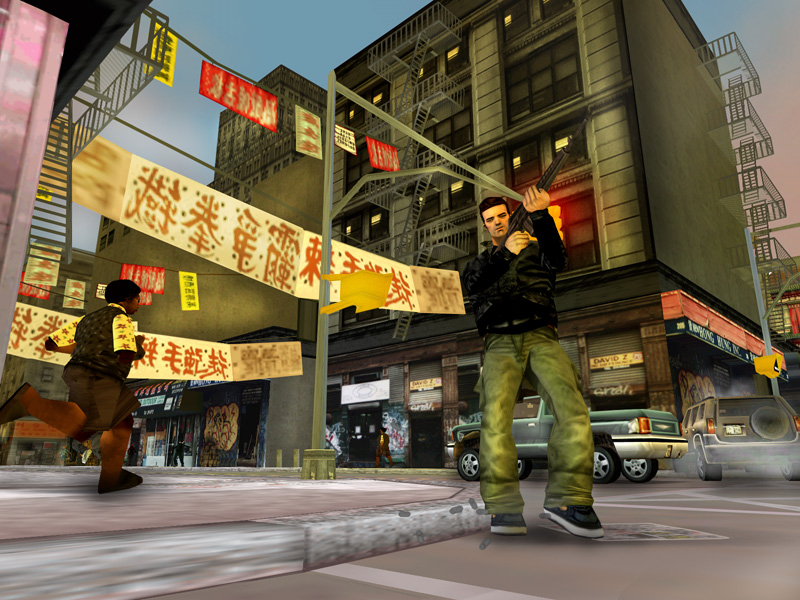
Liberty City evokes New York without reproducing it exactly. The grid, bridges, borough-like districts, and density create a sense of compressed urban movement. In GTA III, the city’s geography gradually opens as the story progresses. In GTA IV, the setting feels more socially specific, with immigrant identity and the distance between expectation and reality shaping Niko Bellic’s story. The shared city name masks different interpretations of urban life.
Vice City: music and image as world-building
Vice City turns a Miami-inspired setting into a bright, highly stylized stage. Its radio stations and 1980s references are not background decoration; they help the player remember the place. A song can become tied to a drive, a mission, or a particular moment. The setting’s nostalgia is carefully composed, and its exaggerated surface supports a story about ambition, power, and criminal hierarchy.
San Andreas: distance, identity, and scale
San Andreas links several cities and rural regions in a fictional state. Its breadth supports a story about family, neighborhood, and political change, while character skills and appearance systems give the player more ways to shape CJ. The expansive world creates a sense of travel, but it also asks players to spend time crossing long distances. Scale is strongest when locations have distinct identities and reasons to revisit them.
Story, freedom, and the player’s role
GTA stories place players inside a criminal world without presenting the protagonist as a simple hero. Characters may pursue money, status, safety, or a way out, while the city’s institutions and media become part of the satire. The games can be read as critiques of power and spectacle, yet their mechanics also reward theft, risk, and destructive play. The mismatch is deliberate at times and uncomfortable at others.
Player agency has limits. A city may permit broad freedom in free roam while a mission demands a fixed order of actions. A choice may feel consequential in one scene and purely cosmetic in another. This is common in authored open worlds: designers balance an expressive sandbox against a story they need to deliver. The best moments are those where the mission’s purpose and the city’s systems support each other.
Content note: Grand Theft Auto is aimed at mature audiences. Its stories include criminal violence, strong language, drugs, sexual references, and satirical depictions of real-world institutions. A player can enjoy the design discussion while recognizing that the tone may not suit every household.
Grand Theft Auto Online is a different commitment
GTA Online takes the world and systems of GTA V into a continuing multiplayer environment. It changes the player’s role from following a protagonist’s campaign to building an online identity, organizing activities, and interacting with other players. The ongoing format can turn the city into a social space, but it requires active servers, account access, updates, and a community that changes over time.
Its economy, progression, and activity rotation can make the experience feel very different from single-player. Friends may arrive with years of accumulated progress, while a new player is still learning the interface. Competitive and cooperative modes also create different social pressures. A one-time purchase and an ongoing online service are not equivalent forms of access; online availability and features vary by platform and region.
GTA Entries by Structure
- Early 3D open-world design: GTA III is the clearest example of the series’ early 3D design.
- For a strong sense of place: Vice City’s music and visual identity are a major part of its appeal.
- For a broad, character-driven sandbox: San Andreas offers a large map and substantial progression systems.
- For a more focused crime drama: GTA IV keeps the story closer to one protagonist and one city.
- For varied mission perspectives: GTA V moves among three leads and a large region.
- For social missions and ongoing activity: GTA Online is designed around multiplayer and recurring updates.
These examples show different ways into the series rather than a required order. Main entries share a fictional universe and recurring motifs, but many stories stand alone. Older games can feel less forgiving by modern standards, and later re-releases may change the handling or appearance. Entry choices often reflect interest in the series’ history, satire, driving, exploration, narrative, or multiplayer.
Grand Theft Auto Beyond Map Size
Open-world games are sometimes compared by square kilometers or activity counts. Grand Theft Auto shows why those measures are incomplete. A convincing city needs readable neighborhoods, memorable routes, a meaningful relation between travel and mission design, and enough variety in what the player can do. The radio, vehicles, architecture, and pedestrian behavior all contribute to the feeling of place.
There is a cost to that freedom. The player may spend time driving across familiar roads, repeat missions after a failure, or find that an optional activity adds little to the story. A larger map can make those costs more visible. The series works best when the city gives even an unscripted trip a character and when a mission uses the setting rather than treating it as a blank backdrop.
Grand Theft Auto combines scripted stories with open-ended driving, missions, radio, and satire. The series has moved from top-down crime games to 3D cities and online play. Each shift raises a familiar design problem: how can players roam freely without making the missions feel detached from the city?