Top 100 Video Games of All Time
 by
in
Games matter for different reasons: a clear rule, a memorable world, a new way to tell a story, or an idea that other developers build on. This ranking weighs design and influence across generations and regions.
A strong list gives each choice a reason. Some games make a simple rule compelling; others build worlds worth returning to, change a genre, or offer new ways to play together. This ranking spans generations and regions instead of treating early North American releases as the whole history of games.
The order reflects design and influence, not sales or personal favorites. Short arcade games, long role-playing campaigns, and quiet exploration games appear together because they offer different kinds of play. Release years refer to the first release when known; international launch dates and localized names may differ.
How the list is weighted
- Play that still communicates: the rules remain legible and satisfying without needing nostalgia to explain them.
- Design identity: the game has a recognizable structure, rhythm, or point of view.
- Reach: it crossed platforms, languages, communities, or generations.
- Influence: later games borrowed a technique, expectation, or format it helped make familiar.
- Completeness: the work’s central systems support one another rather than resting on a single memorable feature.
These measures do not reward scale by itself. A huge map can be empty, and a small game can feel complete. The ranking is subjective; the brief notes explain why each game appears where it does.
100 games that shaped the medium
| Rank | Game | Why it matters |
|---|---|---|
| 01 |

Tetris
|
A pure puzzle of pressure and space. |
| 02 |

Super Mario Bros.
|
A first level that teaches by play. |
| 03 |

The Legend of Zelda: Breath of the Wild
|
An open world built for experiments. |
| 04 |

Doom
|
Speed, combat, sharing, and modding. |
| 05 |

Minecraft
|
A sandbox for building and survival. |
| 06 |

Pac-Man
|
Enemy patterns turn each chase into a route-planning puzzle. |
| 07 |

Grand Theft Auto III
|
A city for authored and free play. |
| 08 |

Final Fantasy VII
|
A cinematic RPG with global reach. |
| 09 |

The Legend of Zelda: Ocarina of Time
|
A touchstone for 3D adventure controls. |
| 10 |

Dark Souls
|
Patient combat in a connected world. |
| 11 |

Super Mario 64
|
A model for expressive 3D movement. |
| 12 |

Street Fighter II
|
Matchups with room for mastery. |
| 13 |

The Legend of Zelda
|
A console quest shaped by secrets. |
| 14 |

Half-Life
|
A story staged without constant cuts. |
| 15 |

Chrono Trigger
|
A compact RPG with lasting choices. |
| 16 |

Portal 2
|
Spatial puzzles with precise comic timing. |
| 17 |
Super Metroid
|
Abilities turn backtracking into discovery. |
| 18 |
The Sims
|
A sandbox for player-made stories. |
| 19 |

World of Warcraft
|
A persistent world for group progress. |
| 20 |

Red Dead Redemption 2
|
Frontier detail in a measured story. |
| 21 |

Space Invaders
|
Escalating formations and score pressure. |
| 22 |
Ms. Pac-Man
|
A maze with changing enemy patterns. |
| 23 |

Donkey Kong
|
Platform hazards and character drama. |
| 24 |

Super Mario World
|
Exploration built into precise platforming. |
| 25 |

Metal Gear Solid
|
Stealth, cinema, and eccentric detail. |
| 26 |

Resident Evil
|
Puzzles and scarcity define survival horror. |
| 27 |
Resident Evil 4
|
A new grammar for third-person action. |
| 28 |
Sid Meier’s Civilization
|
An empire built one turn at a time. |
| 29 |

StarCraft
|
Asymmetric factions and competitive RTS. |
| 30 |

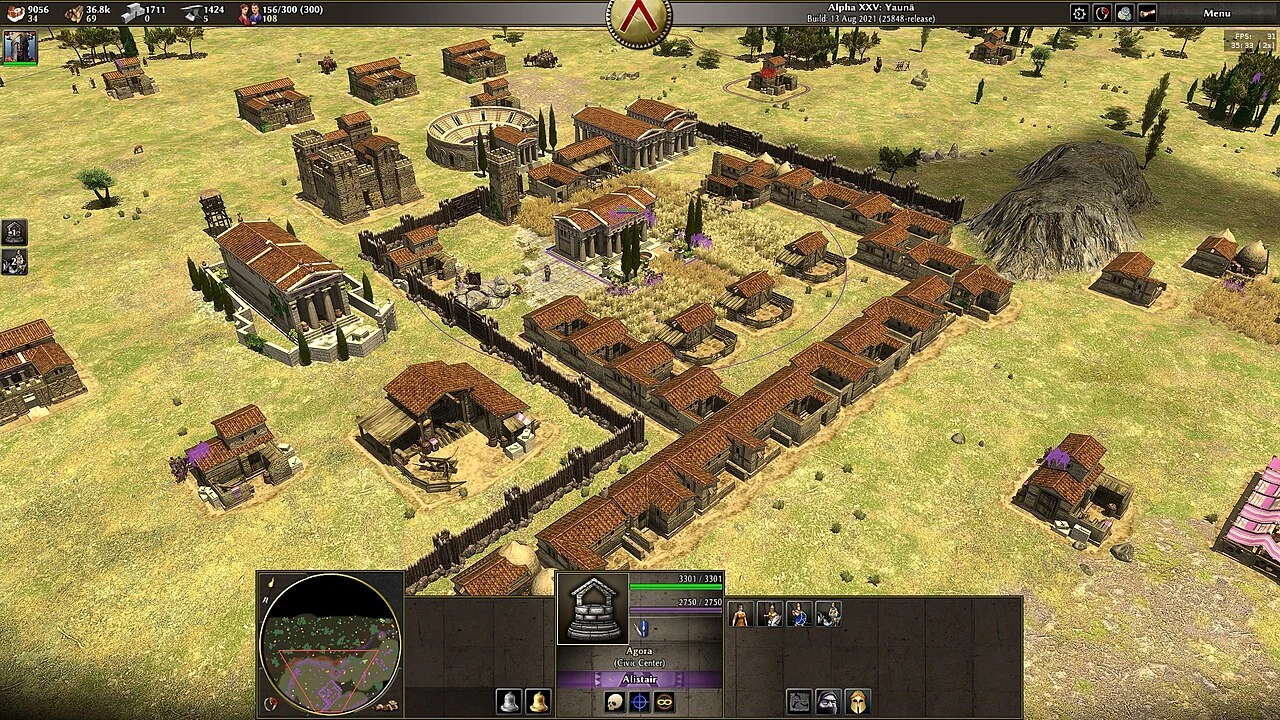
Age of Empires II
|
Historical campaigns and economic choices. |
| 31 |
Pokémon Red and Blue
|
Trading makes collecting social. |
| 32 |

Super Mario Kart
|
Racing designed for friendly rivalry. |
| 33 |
Animal Crossing
|
Real-time routines and gentle creativity. |
| 34 |
Metroid Prime
|
First-person exploration with a puzzle map. |
| 35 |

Halo: Combat Evolved
|
Console FPS built around co-op and arenas. |
| 36 |
GoldenEye 007
|
Split-screen shooting and stealth. |
| 37 |
Quake
|
3D play, network matches, and mods. |
| 38 |

Command & Conquer
|
Fast missions and clear battlefield signals. |
| 39 |
Warcraft III: Reign of Chaos
|
Custom maps and hero-led strategy. |
| 40 |
Ultima IV: Quest of the Avatar
|
Virtue as a character system. |
| 41 |
Rogue
|
Procedural dungeons and permanent loss. |
| 42 |
Rogue Legacy
|
Failure across generations becomes progress. |
| 43 |

Hades
|
Action, character, and repeated runs. |
| 44 |

Celeste
|
Precise platforming with human stakes. |
| 45 |

Journey
|
A brief anonymous social journey. |
| 46 |

Shadow of the Colossus
|
Scale and landscape with emotional weight. |
| 47 |
Outer Wilds
|
Knowledge opens the solar system. |
| 48 |

Disco Elysium
|
Role-play through dialogue and thought. |
| 49 |

Baldur’s Gate II: Shadows of Amn
|
Party tactics with dense character writing. |
| 50 |

The Elder Scrolls V: Skyrim
|
A flexible fantasy world for wandering. |
| 51 |

Mass Effect 2
|
Squad bonds in a science-fiction RPG. |
| 52 |
Dragon Quest III
|
Flexible jobs in a defining console RPG. |
| 53 |

Final Fantasy VI
|
An ensemble and a shifting conflict. |
| 54 |

Final Fantasy X
|
A directed journey with turn-based combat. |
| 55 |

NieR: Automata
|
Perspective shifts as part of the story. |
| 56 |

Monster Hunter: World
|
Cooperative hunts reward monster knowledge. |
| 57 |
Street Fighter III: Third Strike
|
Parries and precision make spectacle playable. |
| 58 |

Super Smash Bros. Melee
|
Movement depth in a party fighter. |
| 59 |

Mortal Kombat
|
Digitized fighters and cultural controversy. |
| 60 |

Dance Dance Revolution
|
Dance made into a rhythm interface. |
| 61 |

Wii Sports
|
Motion play for a shared living room. |
| 62 |

Guitar Hero
|
Songs become playable performances. |
| 63 |

Rock Band
|
A cooperative band game designed for shared home play. |
| 64 |
FIFA 98: Road to World Cup
|
Football and club culture across markets. |
| 65 |

Pro Evolution Soccer 6
|
Passing feel takes center stage. |
| 66 |

SimCity 2000
|
A city plan as a layered system. |
| 67 |
The Oregon Trail
|
Travel choices became classroom memory. |
| 68 |

Myst
|
A quiet world of CD-ROM puzzles. |
| 69 |

Prince of Persia
|
Fluid movement for platforming. |
| 70 |

Castlevania: Symphony of the Night
|
Exploration transforms side-scrolling action. |
| 71 |

Final Fantasy XIV
|
An online RPG rebuilt as a shared story. |
| 72 |

League of Legends
|
Team roles shape a competitive MOBA. |
| 73 |

Dota 2
|
Strategy built for player and spectator. |
| 74 |

Counter-Strike
|
Short rounds make information valuable. |
| 75 |

Fortnite
|
Building and battle royale in a live space. |
| 76 |

Among Us
|
Hidden roles make talk the main mechanic. |
| 77 |
Stardew Valley
|
Farming and friendship become routine. |
| 78 |

Spelunky
|
Consistent rules in shifting levels. |
| 79 |

Katamari Damacy
|
A surreal mechanic with perfect logic. |
| 80 |

Okami
|
Brushwork connects style and mechanics. |
| 81 |

BioShock
|
A shooter shaped by moral tension. |
| 82 |

Deus Ex
|
Multiple routes make builds expressive. |
| 83 |
Thief: The Dark Project
|
Sound and shadow create stealth. |
| 84 |

Silent Hill 2
|
Psychological dread over constant combat. |
| 85 |
Left 4 Dead
|
Co-op survival with adaptive pacing. |
| 86 |
Monster Train
|
Deck strategy across layered battle lanes. |
| 87 |

Into the Breach
|
Tactical puzzles with visible enemy intent. |
| 88 |
XCOM: Enemy Unknown
|
Squad tactics with campaign risk. |
| 89 |

Fire Emblem: Three Houses
|
Character bonds around tactical combat. |
| 90 |
It Takes Two
|
New cooperative verbs in every chapter. |
| 91 |

Grim Fandango
|
A comic adventure in a distinct world. |
| 92 |
Return of the Obra Dinn
|
Deduction is the entire interface. |
| 93 |
What Remains of Edith Finch
|
Playable stories shaped around distinct lives. |
| 94 |
Kerbal Space Program
|
Engineering through failure and physics. |
| 95 |

Microsoft Flight Simulator
|
A world-scale flight simulation. |
| 96 |

Asteroids
|
Vector movement and arcade survival. |
| 97 |

Frogger
|
Timing and traffic in a compact puzzle. |
| 98 |

Virtua Fighter 2
|
3D space for fighting-game timing. |
| 99 |

ICO
|
Quiet storytelling through architecture. |
| 100 |

Bloodborne
|
Aggressive recovery in gothic action combat. |
No matching games. Try another title, genre, or keyword.
What the ranking says about great design
The top positions favor games whose rules can be taught through action. Tetris explains danger with the board itself. Super Mario Bros. demonstrates speed, jumping, and reward in the opening minutes. Breath of the Wild gives objects consistent properties, so a player can test a plan instead of waiting for a designer’s one approved solution. This clarity is not the same as simplicity: each of these games leaves room for skill to grow.
Long-form games earn their place through a different promise. Final Fantasy VII, World of Warcraft, The Elder Scrolls V: Skyrim, and Red Dead Redemption 2 give players time to inhabit characters or places. Their size matters only when the world has a readable identity, worthwhile choices, and a pace that supports attention. A vast map without meaningful routes is just distance.
Competition and cooperation are also part of the medium’s history. Street Fighter II turns character knowledge into a conversation between opponents; Counter-Strike makes a short round carry team-wide consequences; It Takes Two builds every major challenge around shared action. These games show why “best” cannot mean “most content.” The social structure is itself the design.
Original versions and later releases
Platform access also changes over time. Original versions may be unavailable, altered in re-releases, or tied to hardware that is difficult to maintain. A remake can preserve a story while changing combat, pacing, or visual style; a port may keep the mechanics while adding new control options. When the original form matters to a question about design, identify the release being discussed rather than treating every edition as identical.
A game's place on the list is not a recommendation for every player. Older controls, strict timing, or vanished multiplayer communities can make a classic difficult to play now. A remake may suit some players better. The ranking records design and historical influence while leaving room to disagree.