Shooter and Action Games: Core Styles
 by
in
“Action” covers games built around quick responses, while shooters add aiming and space control. The camera, pace, and cost of a mistake explain more than the label alone.
Shooters ask the player to read space, aim, manage threats, and decide when to move. Action games may share those demands without centering firearms: they can focus on melee combat, platform movement, parries, or survival under pressure. The categories overlap because modern games combine combat, exploration, narrative, and progression in different proportions.
The main player task distinguishes these styles. Arena shooters emphasize continuous movement and control of space; tactical shooters center on communication, information, and position defense. Third-person action makes animation and timing more visible than first-person play. These differences separate expectations such as precise aiming, careful teamwork, and broader action.
Core shooter and action formats
| Format | Camera and tempo | Primary skill | Typical friction |
|---|---|---|---|
| First-person shooter (FPS) | View follows the character; pace ranges from methodical to very fast. | Aim, movement, and reading the environment. | Motion sensitivity, quick camera turns, and visual clutter. |
| Third-person shooter | Camera sits behind or beside the character. | Positioning, aiming, and use of cover or movement tools. | Camera obstruction and uneven visibility around corners. |
| Tactical shooter | Usually slower; rounds reward information and preparation. | Communication, patience, sound awareness, and role discipline. | High punishment for mistakes and dependence on a coordinated team. |
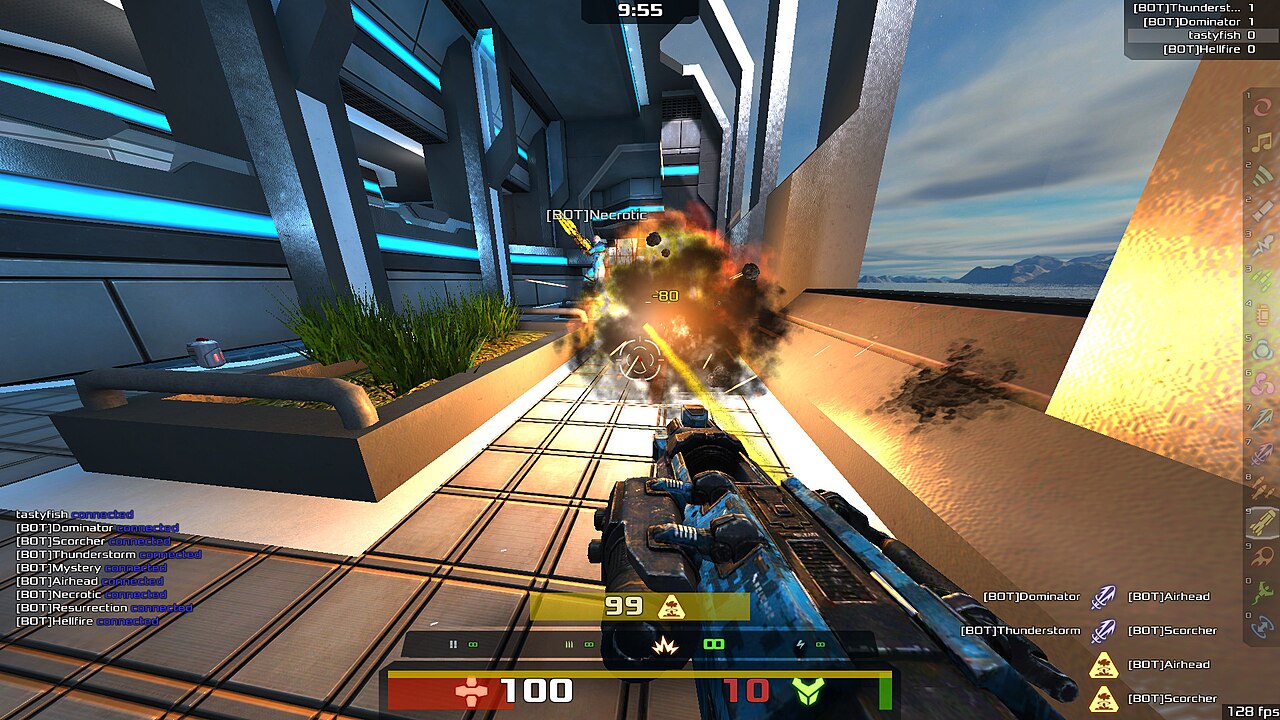
| Arena or movement shooter | Fast, open spaces and frequent encounters. | Strafing, route control, weapon switching, and prediction. | A steep skill gap between new and experienced players. |
| Cover-based action shooter | Third-person view with deliberately framed encounters. | Choosing cover, managing reloads, and advancing safely. | Repeated encounter patterns can feel staged. |
| Hero shooter | Team combat built around distinct abilities. | Role balance, ability timing, and team coordination. | Roster changes and updates can alter the preferred strategy. |
| Action-adventure | Combat sits beside exploration, traversal, and story. | Combining attacks, defensive timing, and environmental tools. | Combat may be less deep than a dedicated action game. |
Camera changes what the player can know
First-person view makes aiming feel direct and often supports strong immersion, but it narrows what the player sees. Threats can enter from outside the frame, and turning quickly may be uncomfortable for some players. Third-person view reveals the avatar and more of the surrounding space, which helps with animation-heavy combat and platforming. The trade-off is that the character model or nearby geometry can block a target.
Camera is also an information system. Crosshairs, hit markers, sound cues, enemy outlines, and damage indicators tell the player what happened and where attention should go next. These cues can make a fast game fairer, but too many on-screen signals compete for attention. Strong design gives each important cue a distinct timing, location, or sound.
Accessibility settings can shape the experience. Common options include adjustable field of view, camera-shake controls, color-blind modes, aim assistance, subtitle detail, remappable controls, and sensitivity settings. An option’s presence does not guarantee a comfortable experience; the combination matters. A slower-paced mode may reduce pressure yet leave a game’s camera or audio cues unchanged.
How shooters create tension
Scarcity changes the value of every shot
Survival-focused action games limit ammunition, healing, or safe places. This turns combat into a question of whether a threat is worth confronting. A player who knows that supplies are scarce may avoid a fight, use a weaker tool, or search for another route. The system feels tense when the scarcity is understandable and the player has meaningful alternatives. If supplies are too hidden or the game forces repeated fights without warning, the same pressure can become frustration.
Enemy behavior is part of the puzzle
Enemies need readable tells: a wind-up before a melee attack, a brief pause before a shot, a flanking route, or a defensive stance. Recognition allows the player to make a better choice. A game can still surprise the player, but surprises are more satisfying when the rules remain consistent. In Doom, forward movement and weapon choice drive aggression. In a tactical shooter, patience and information may matter more than speed. Both forms reward learning, but they define mastery differently.
Weapons should have distinct jobs
A varied arsenal gives each weapon a job. Short-range tools reward movement, precision weapons punish exposure, and heavy weapons can create a moment to regain control. If weapons overlap too much, players may always choose the one with the highest damage. Different reload times, sounds, accuracy, and ammunition limits make each choice situational.
Single-player, co-op, and competitive play
Single-player shooters let level design control the pace. The game can place a long quiet passage before a difficult encounter or use an enemy to teach a new mechanic. Campaigns such as Half-Life, Halo: Combat Evolved, and BioShock use the first-person view for different purposes: continuous narrative space, readable combat arenas, or a world whose systems have moral and thematic weight.
Co-op changes the difficulty equation. One player can draw attention while another revives a teammate or covers a route. Left 4 Dead demonstrates how cooperation can transform a familiar shooting loop into a sequence of shared crises. Good co-op design gives players complementary roles without making one person feel like a support accessory.
Competitive games add social learning. Counter-Strike rewards information, angles, economy, and restraint; a battle royale emphasizes resource gathering and changing safe zones; a hero shooter adds character-specific abilities to team composition. New players face not only a game’s rules but also the accumulated knowledge of a community. Matchmaking quality, practice modes, and clear tutorials strongly affect whether that gap feels learnable.
Where action games sit beside shooters
Action games can express mastery through a blade, a dodge, a jump, a shield, or a rhythm of attacks. Character-action games such as Devil May Cry reward varied combos and style. Soulslike games such as Sekiro: Shadows Die Twice center timing, observation, and deliberate defense. Action platformers combine movement and combat, while brawlers organize encounters around groups of opponents. These games may use aiming in small moments, but their core skill is usually not marksmanship.
Verbs in a game description indicate its central loop. ?Shoot and loot? implies equipment progression; ?stealth and extract? implies information and risk; ?parry and counter? implies timing; ?cover and flank? points to positioning. These phrases name the actions repeated through a typical session.
Action-adventure games blend several loops. Tomb Raider puts traversal and combat in a cinematic framework. The Legend of Zelda combines exploration, tools, and encounters. Grand Theft Auto mixes driving and shooting with an open city. A title can contain action without being a dedicated action game; broad adventures may offer less combat depth than the genre labels suggest.
Shooter and Action Game Trade-offs
- Session length: a campaign mission may take an hour, while a multiplayer round can be brief but lead into another match.
- Input preference: mouse-and-keyboard aiming and controller aiming feel different; aim-assist rules vary by game and platform.
- Network dependence: competitive modes need reliable connections and may lose features when services change.
- Content intensity: violence, horror imagery, and realistic sound design differ considerably across the genre.
- Progression pressure: unlocks can reward practice, but can also create a grind or make a new player’s loadout weaker.
- Learning curve: campaign difficulty, bots, tutorials, and practice ranges can make a competitive game more approachable.
In a first-person shooter, movement can stay on screen for an entire match, so comfort options matter during ordinary play as much as in cutscenes. Common comfort settings cover field of view, weapon sway, camera shake, motion blur, and flash intensity. Repeated exposure during ordinary play can affect comfort in ways a trailer does not show.
A quick genre map
First-person shooters emphasize direct aiming and a close view of the action; third-person shooters make character movement and cover more visible. Tactical shooters foreground communication and preparation, while movement shooters reward constant motion. Action games center mastery of timing, combos, traversal, or defense. Hybrid campaigns move between several of these rhythms.
Shooter and action games are not defined by violence alone. Their strongest systems turn space, timing, information, and risk into readable decisions. Once the central skill is clear, the wide range of styles becomes easier to navigate - and easier to compare on its own terms.